Vul. Doroshenka, 34 – residential building ID: 708
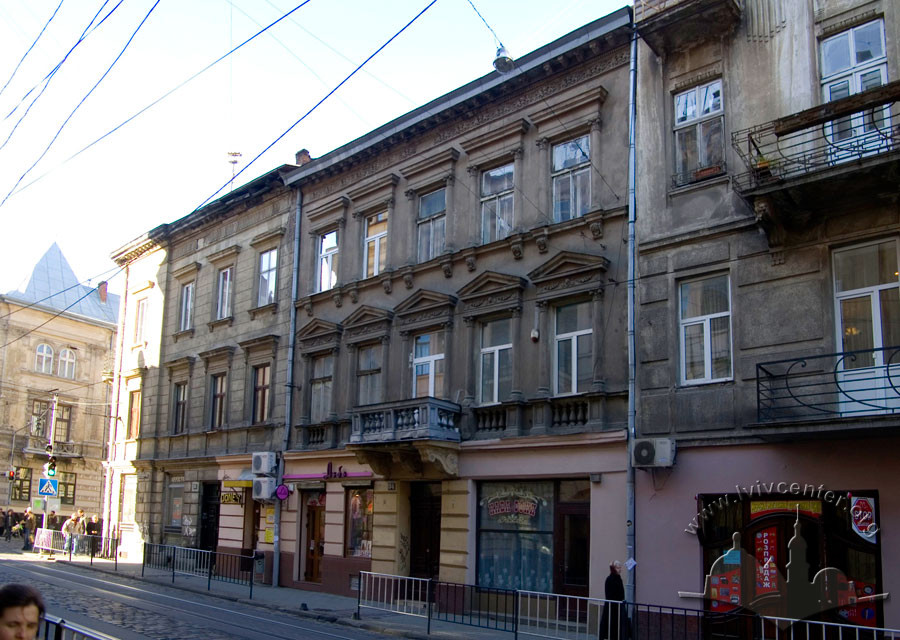
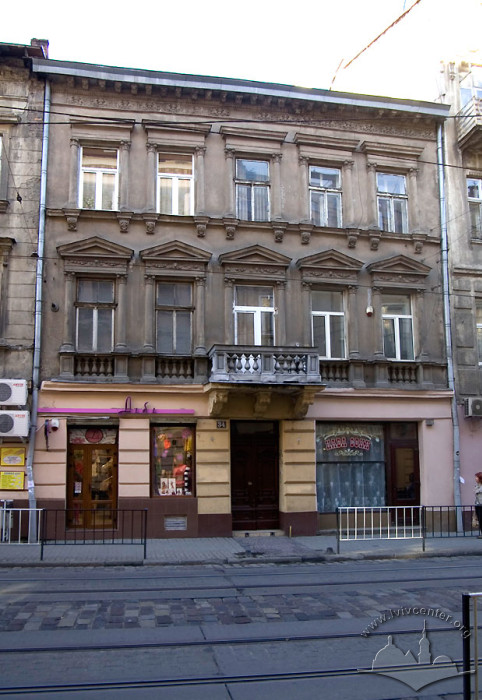
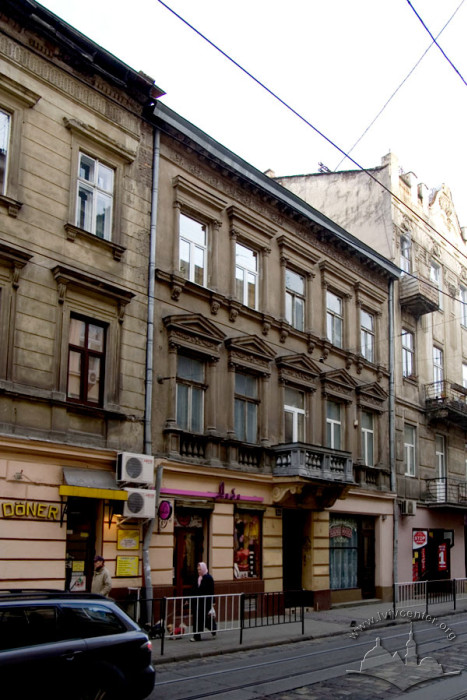
This residential building, part of the street's perimeter development, was constructed in 1908. In 1936, the first floor was remodeled according to a design by architect Antoni Graf. It stands as a characteristic example of early twentieth-century Lviv residential architecture.
Architecture
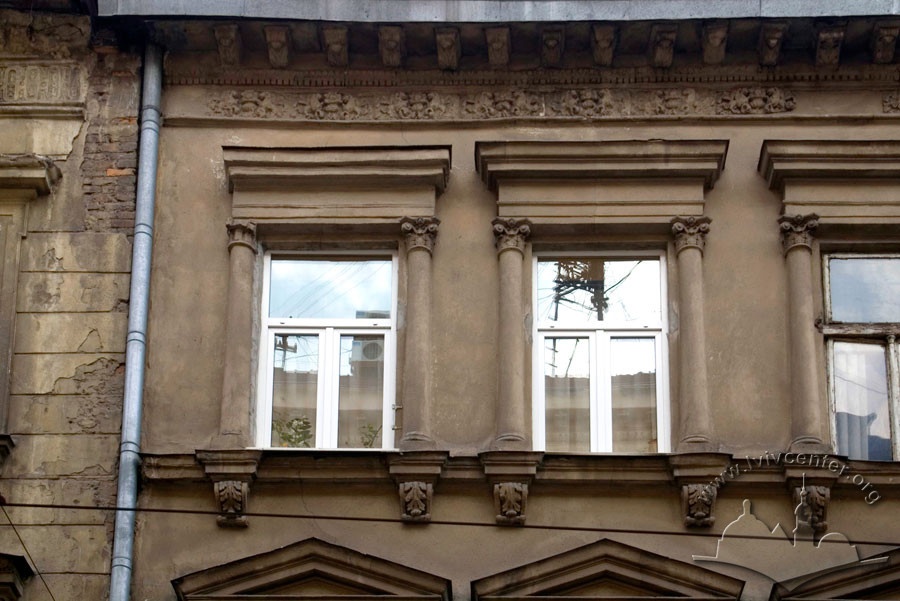
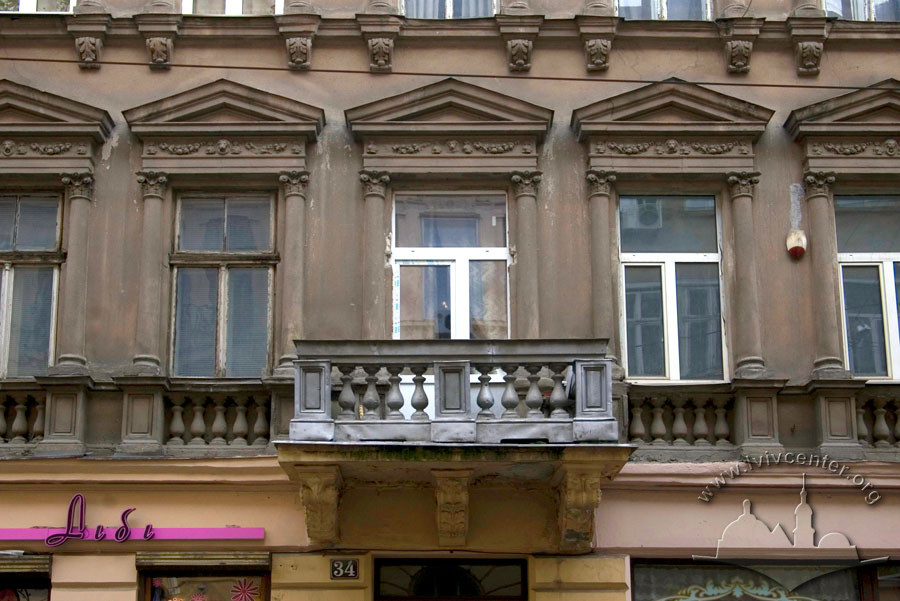
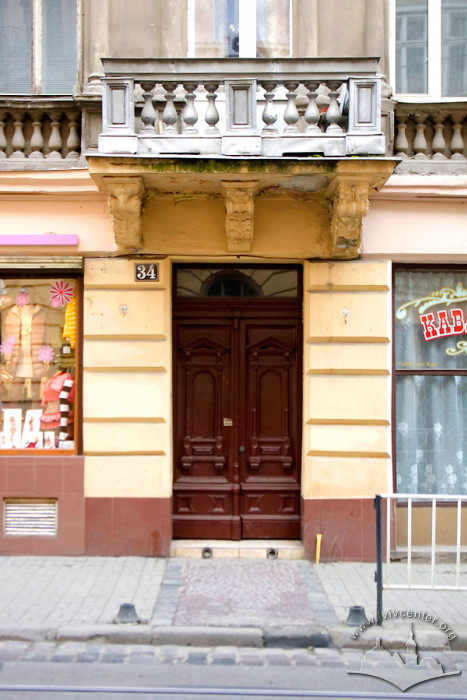
The building was constructed in the Art Nouveau style with Neoclassical elements. It is a three-story brick structure finished in plaster. The composition of the principal elevation is symmetrical. While the original layout was of an enfilade type, it has since been converted to a sectional arrangement. A profiled stringcourse runs between the first and second floors. At the second-floor level, a central balcony is supported by plasterwork corbels in the form of volutes, featuring a plasterwork railing of balusters. The windows on the second and third floors are flanked by semicolumns with capitals of the Corinthian order and are topped with triangular pediments. Plasterwork inserts with balusters are positioned above them. The third-floor windows are also flanked by Corinthian capitals and finished with linear pediments. A profiled cornice with brackets decorated with acanthus leaves runs beneath them. The building is crowned by a prominent, deep-profiled cornice supported by plasterwork brackets.
Related buildings and spaces
-
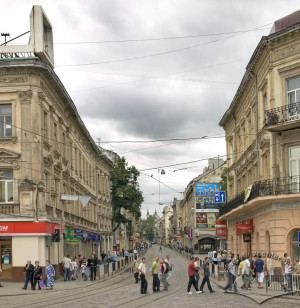
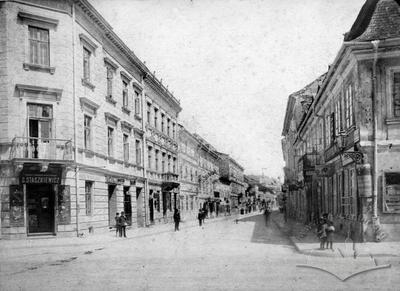
Vul. Doroshenka