Pl. Katedralna, 1 – Boim Chapel ID: 203
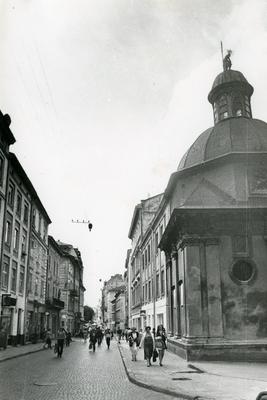
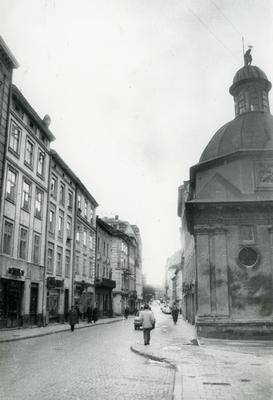
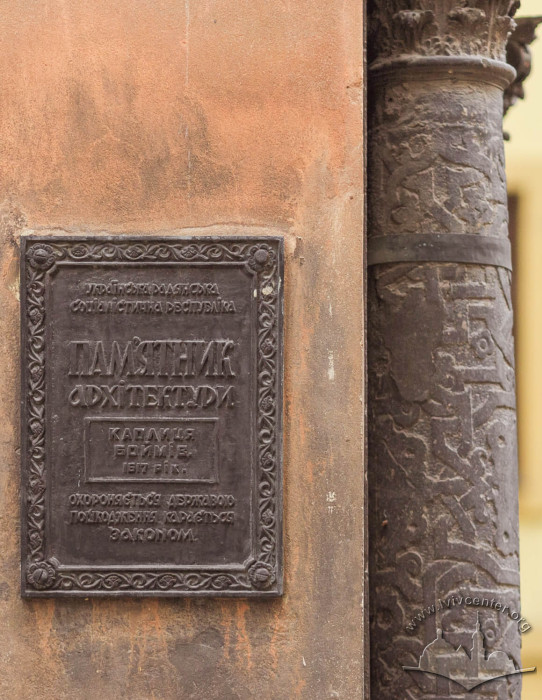
Located near the Latin Cathedral, the chapel was constructed in the Renaissance style between 1609 and 1615 as a family burial chapel commissioned by the Lviv merchant György Boim. It is believed that its builder was the Wrocław architect Andrzej Bemer.
Story
Constructed in the Renaissance style between 1609 and 1615 as a family burial chapel commissioned by the Lviv merchant György Boim. It is believed that its builder was the Wrocław architect Andrzej Bemer.
Between 1609 and 1611, the main volume of the chapel was erected; subsequently, from 1611 to 1615, its western façade was decorated with stone and stucco carvings. The authors of the carvings were Johann Pfister, Hanusz Scholz, and presumably Andrzej Bemer.
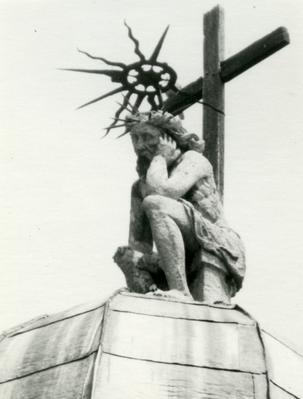
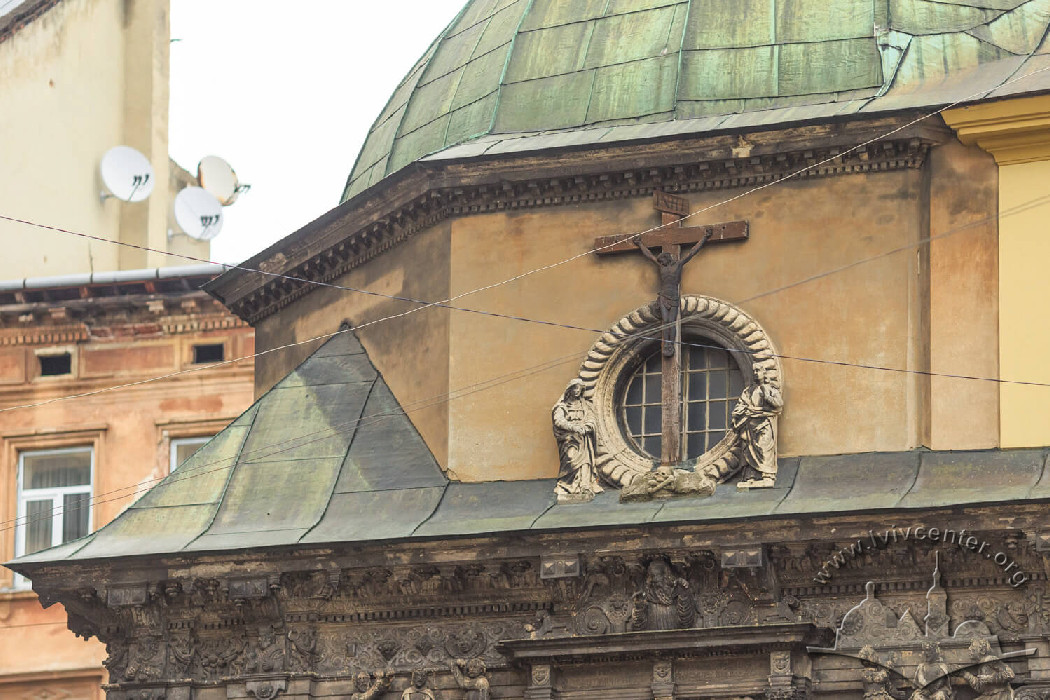
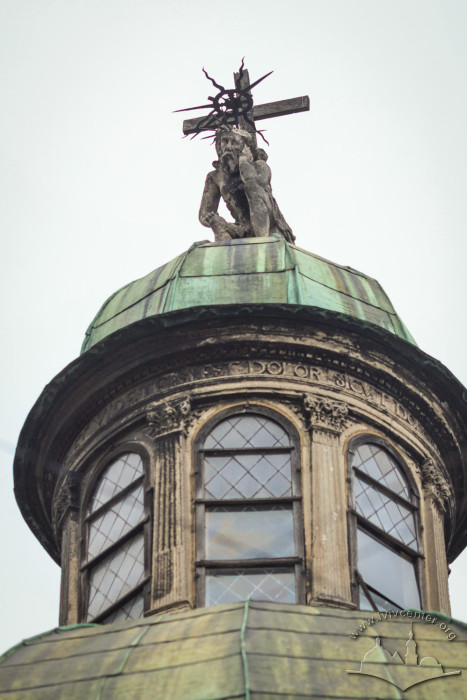
The Boim Chapel is the only surviving structure among the six standalone chapels that once stood in the ancient cemetery, which dated back to the early fifteenth century and existed near the Latin Cathedral until the late eighteenth century. The chapel's second name, Ogrójcowa, comes from the Polish word ogrójec (garden) and derives from the statue on the chapel's dome depicting Christ Sorrowful in the Garden of Gethsemane.
György Boim, of Hungarian descent, was an educated man who studied at the University of Bonn. He accumulated wealth through the wine trade, obtained citizenship, married, and served as the burgomaster of Lviv for a period of time.
From 1967 to the present day, the Boim Chapel building has housed a branch of the Lviv National Art Gallery.
Architecture
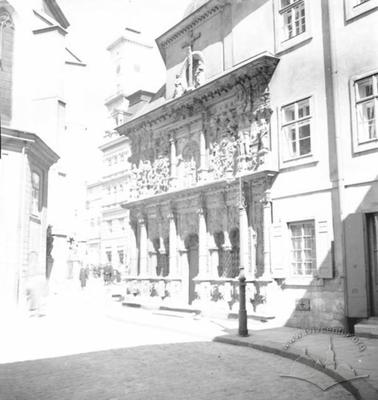
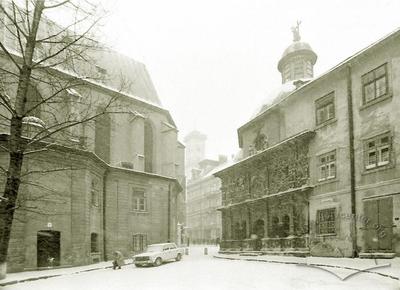
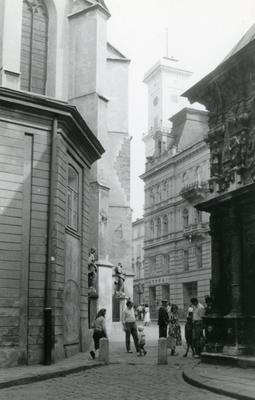
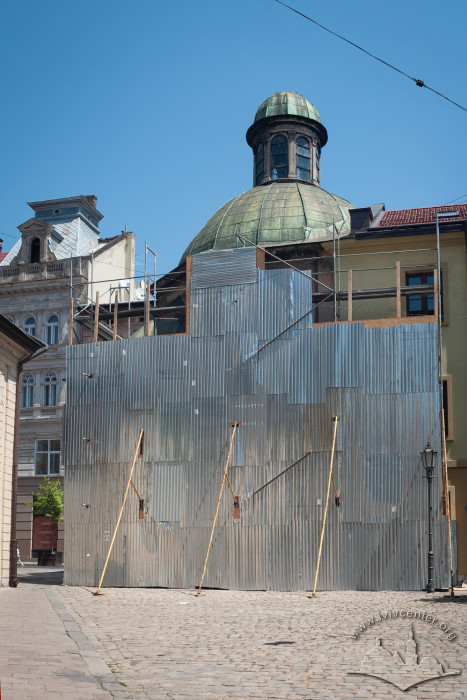
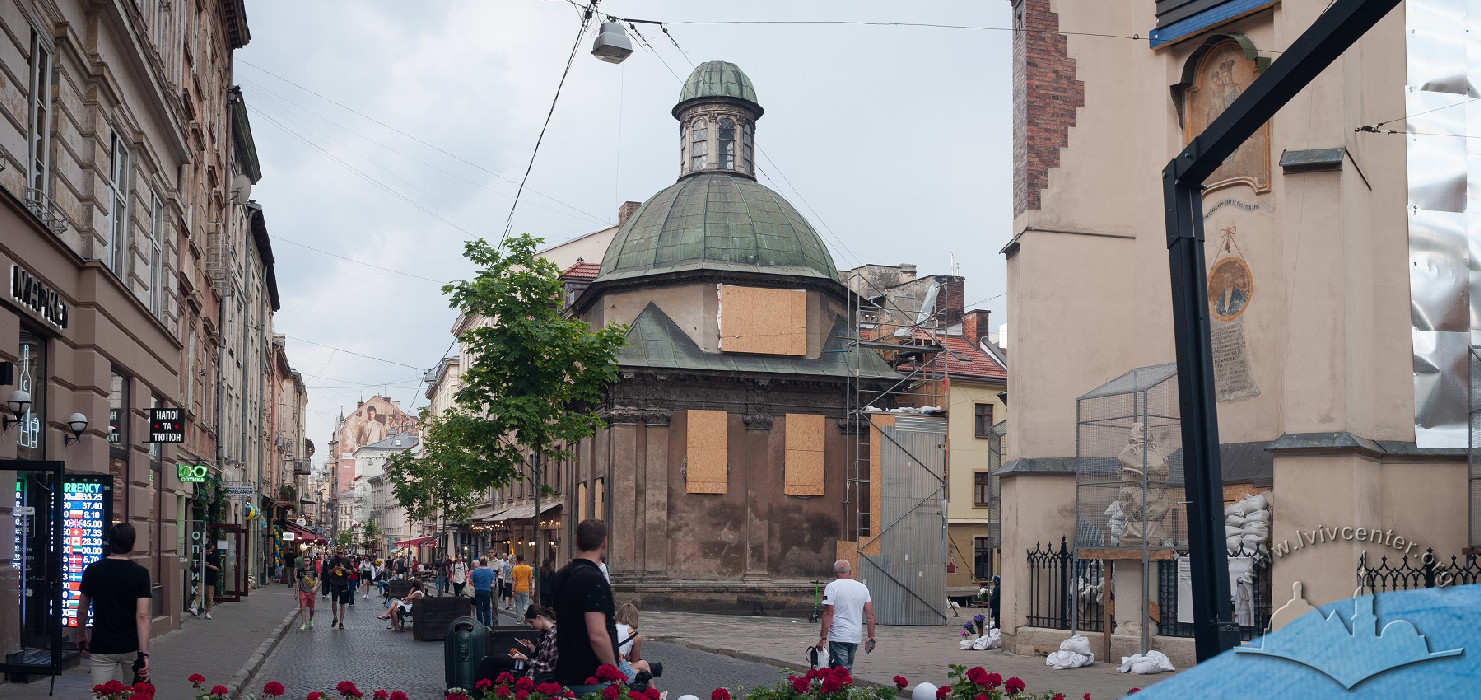
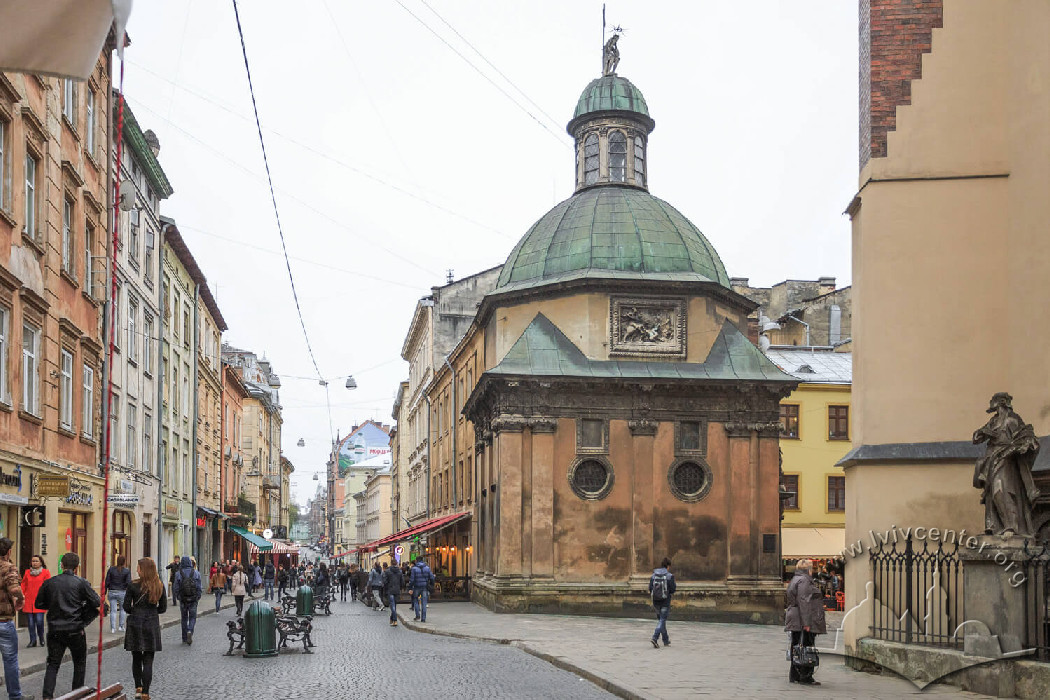
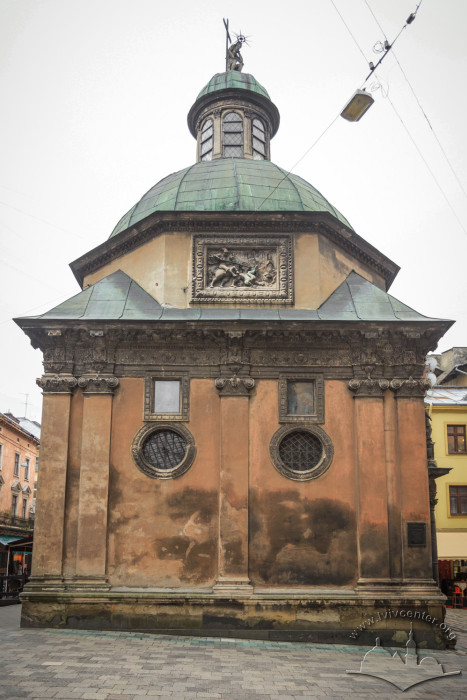
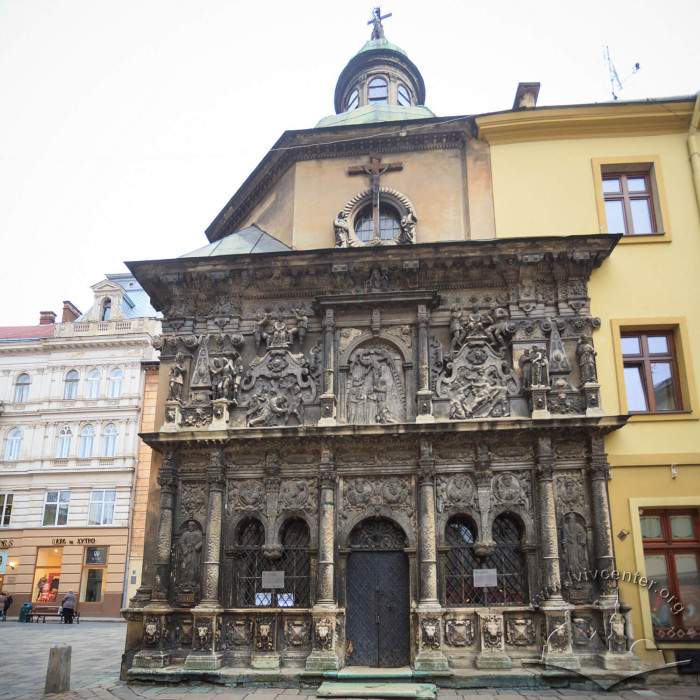
The chapel of the Boim family is located near the Latin Cathedral, on its southeastern side; from the south, it adjoins the residential buildings of vul. Halytska. The structure is small, rectangular in floor plan, and built of limestone. In terms of its spatial composition, the chapel is a cube. It is spanned by a Renaissance dome set on an octagon with a lantern light, topped by the figure of Christ in the Garden of Gethsemane.
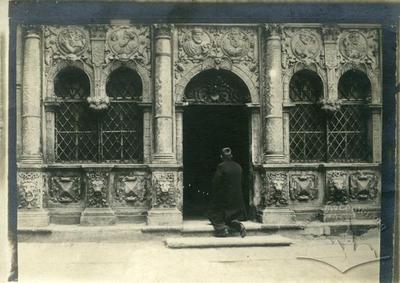
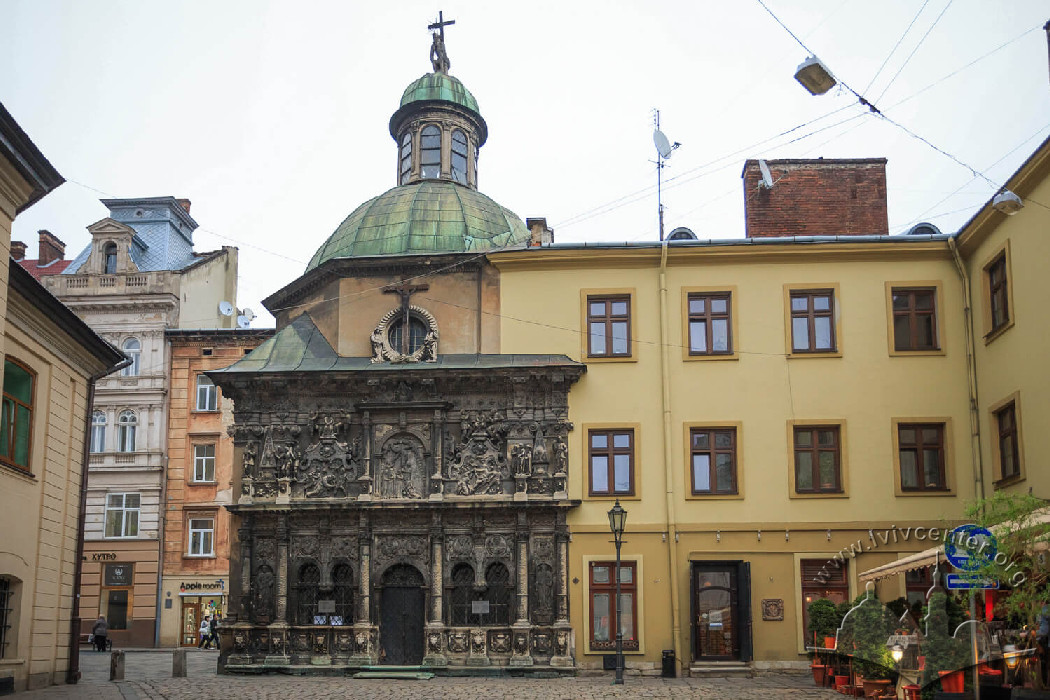
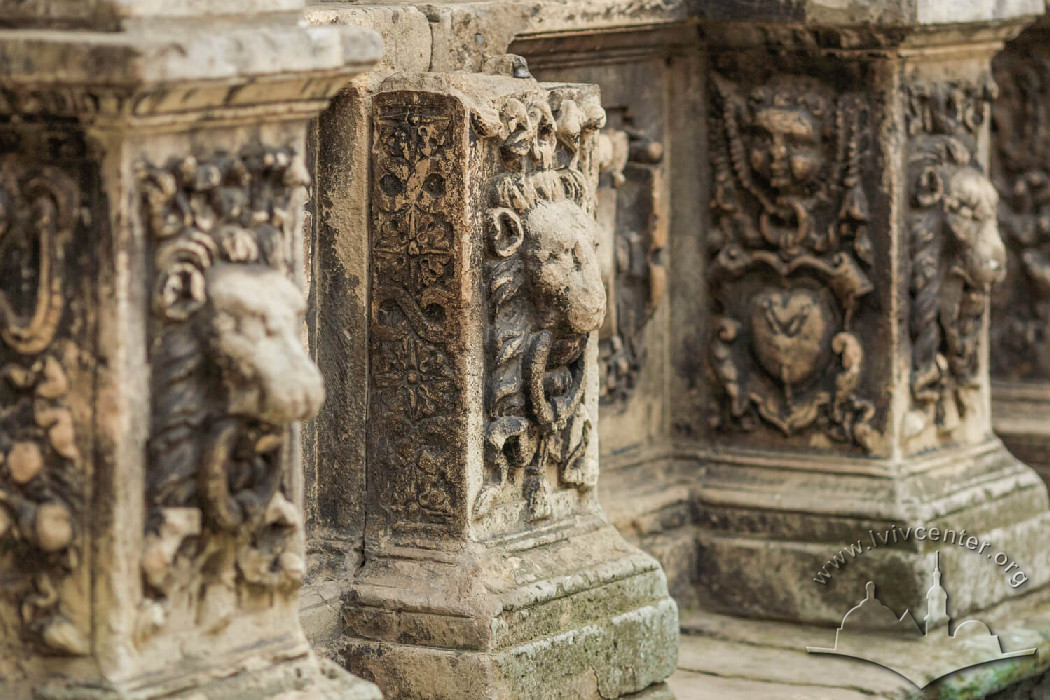
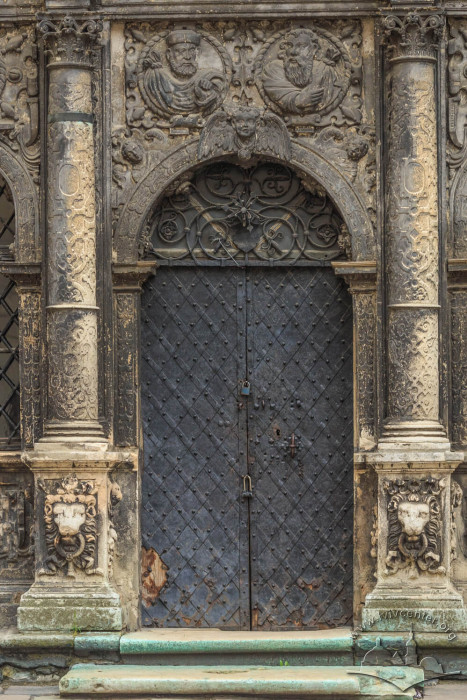
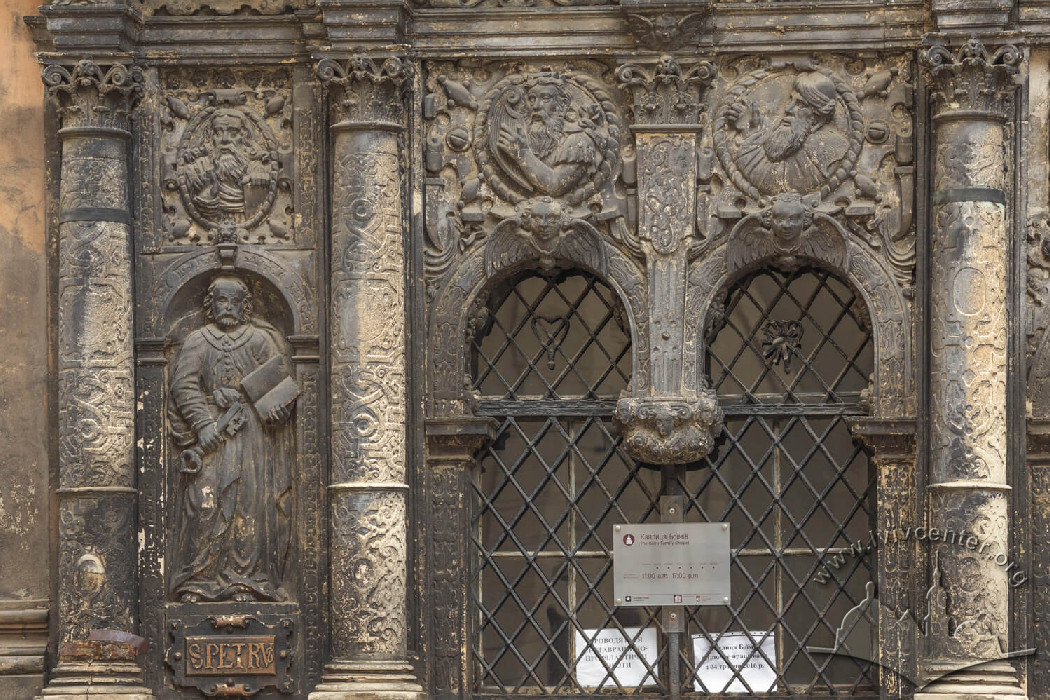
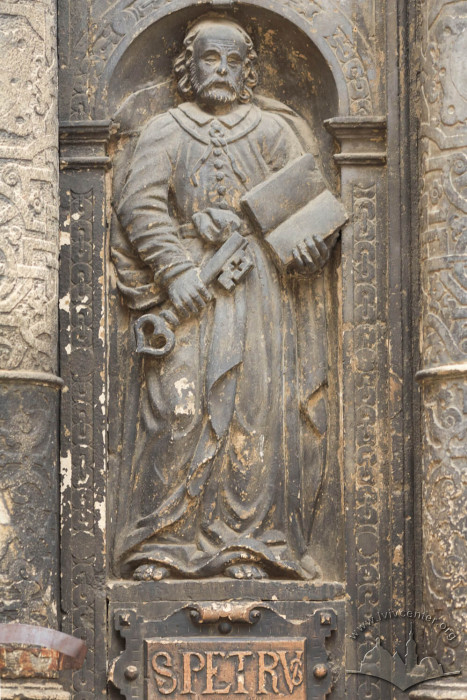
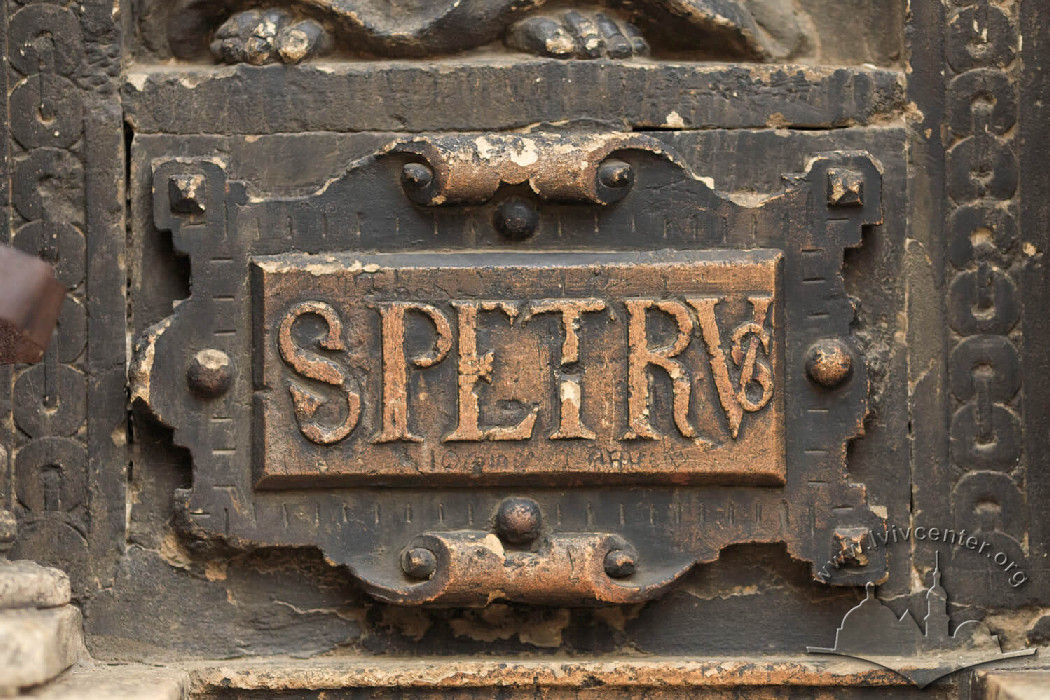
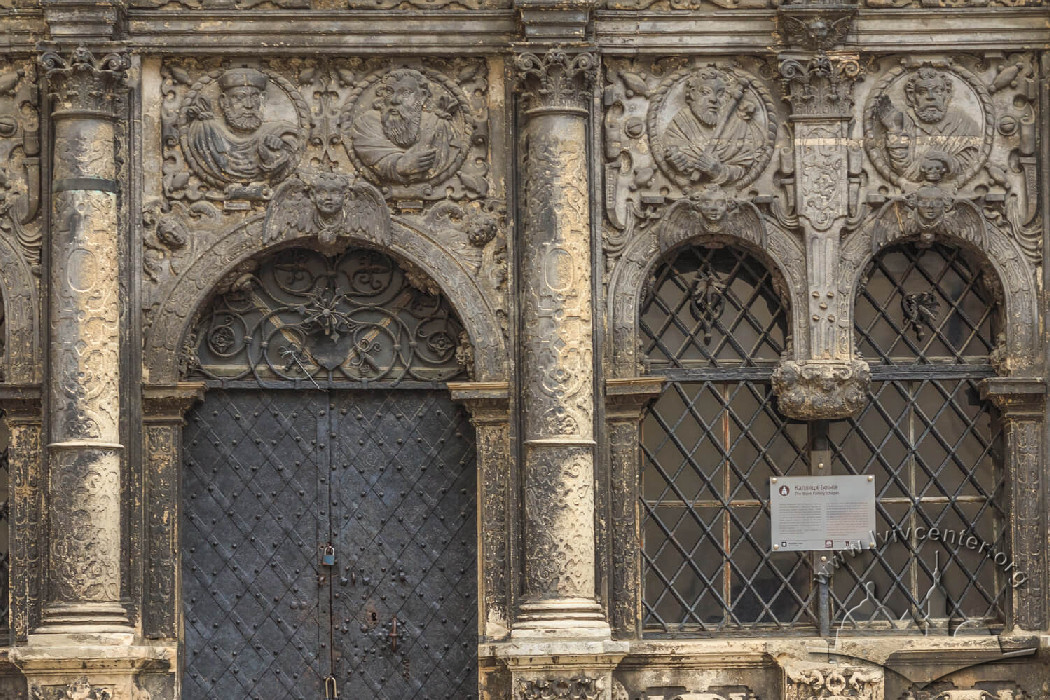
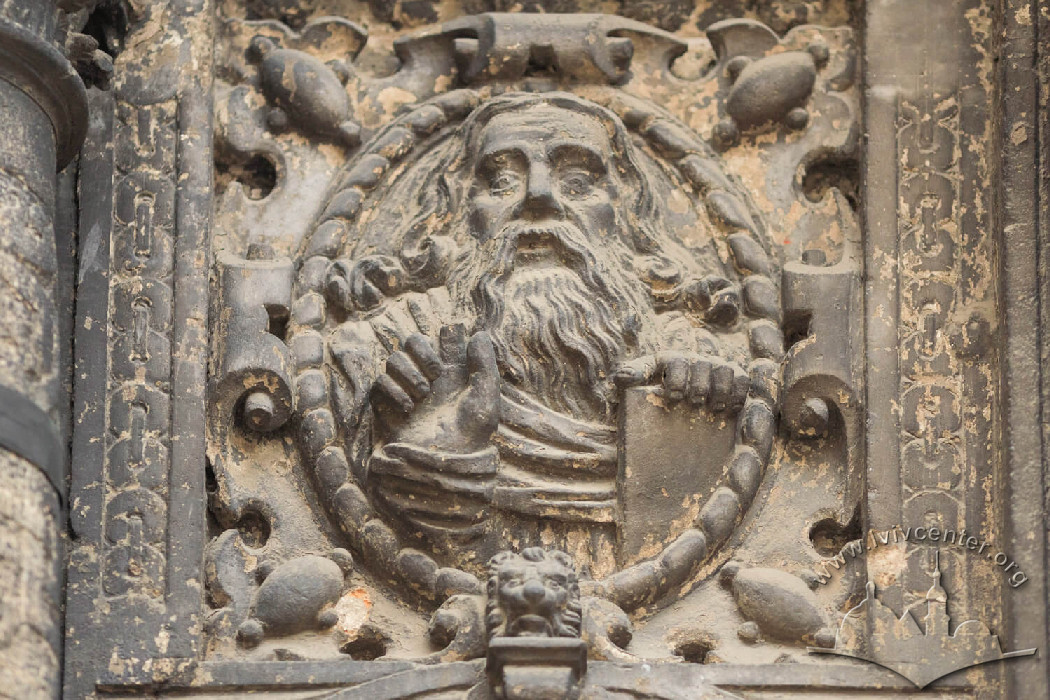
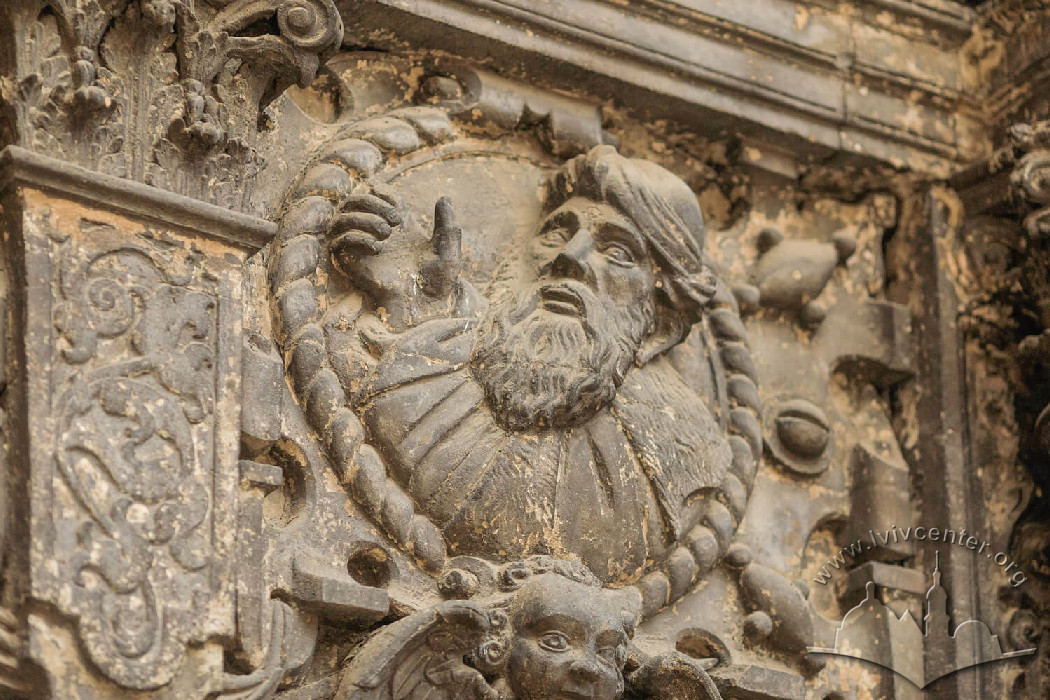
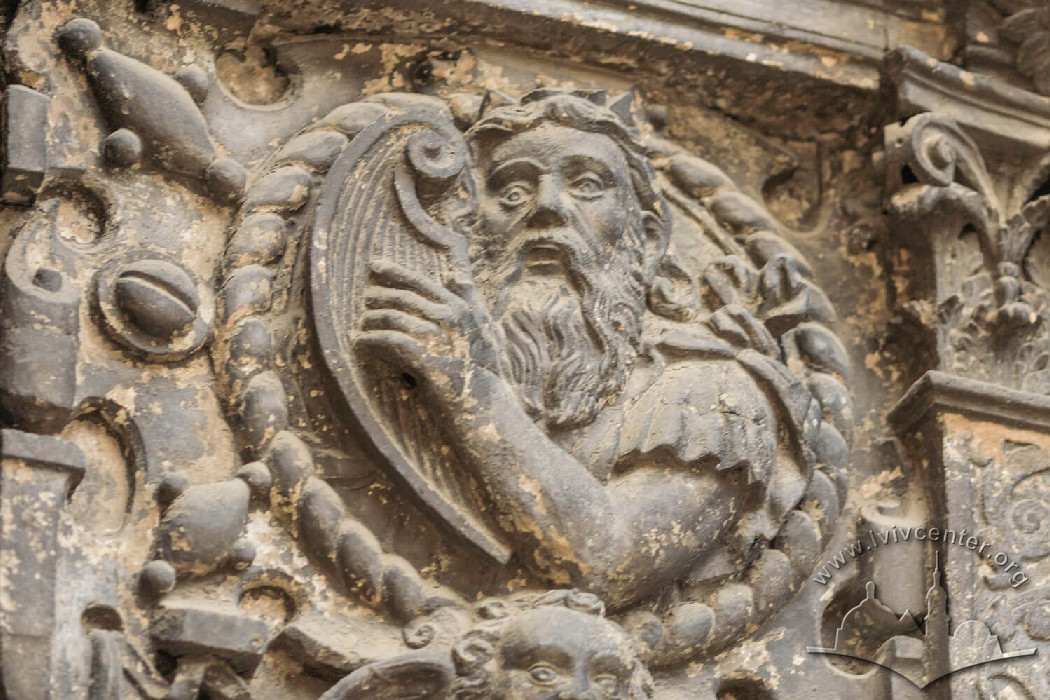
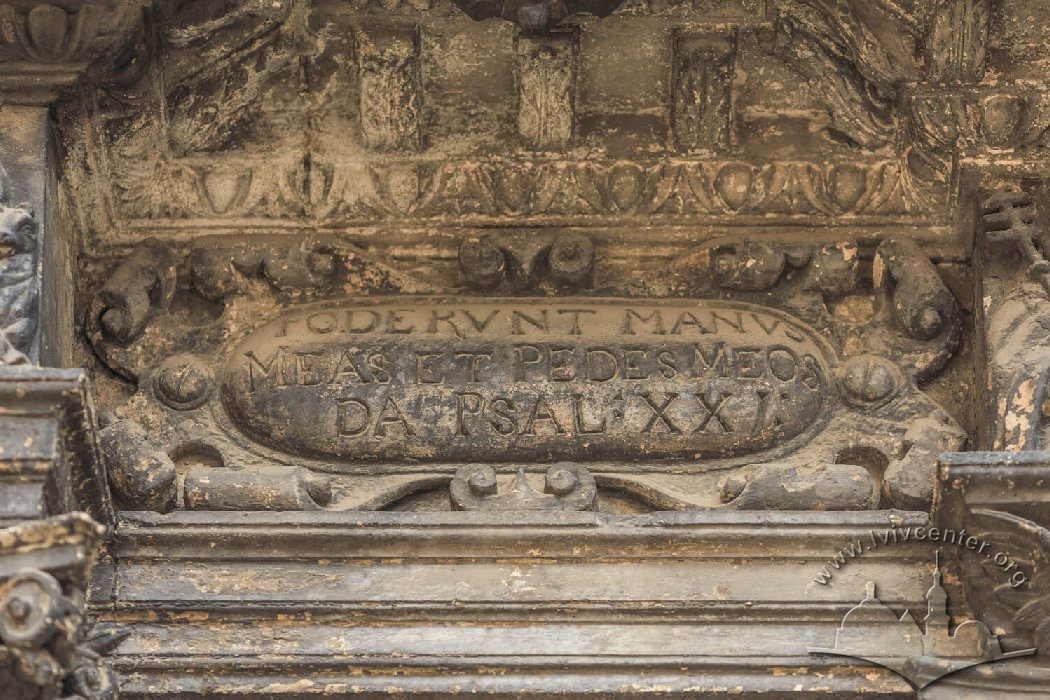
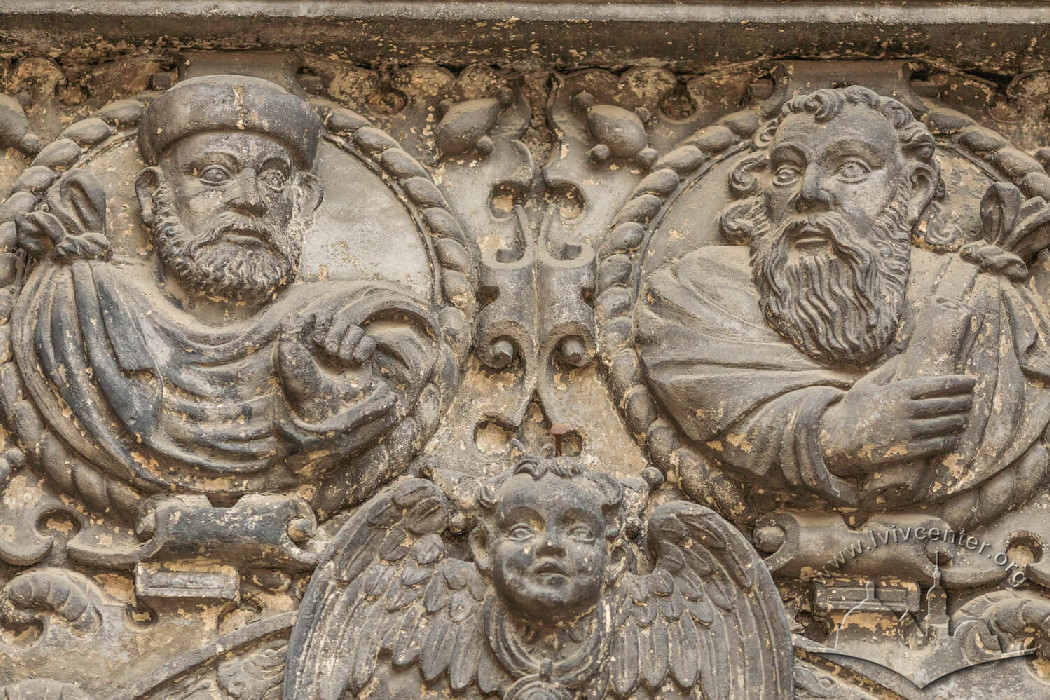
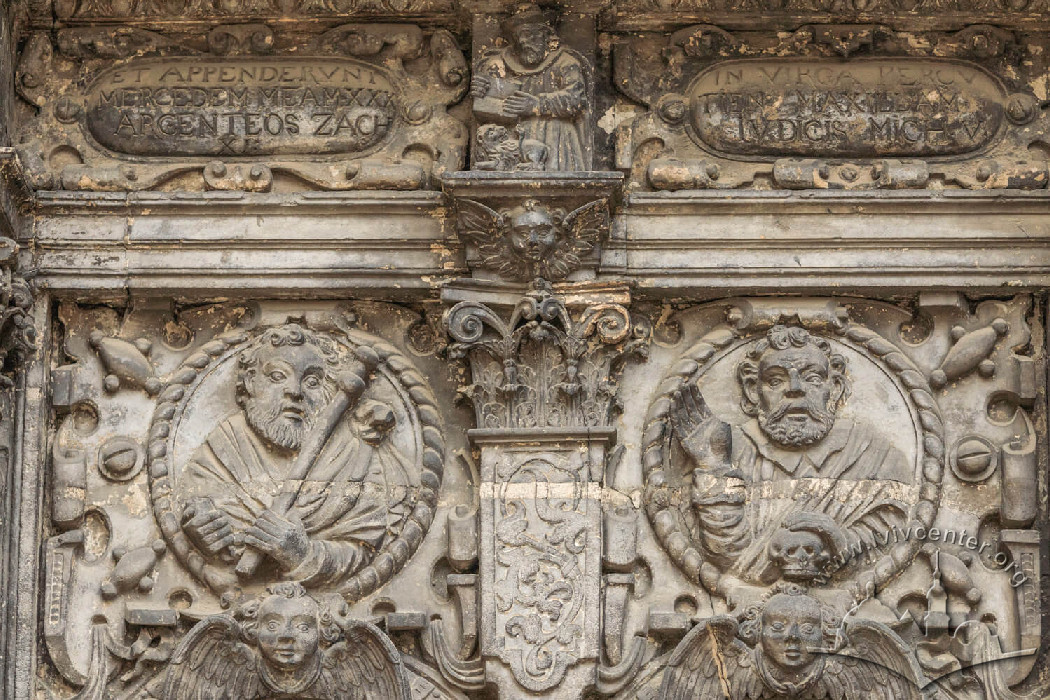
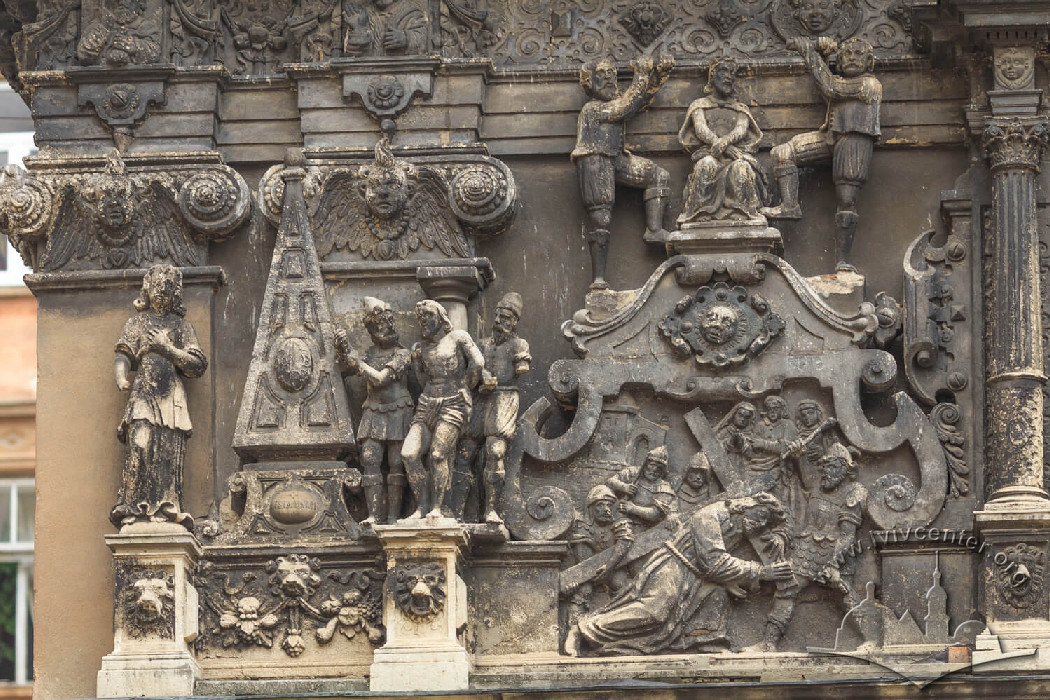
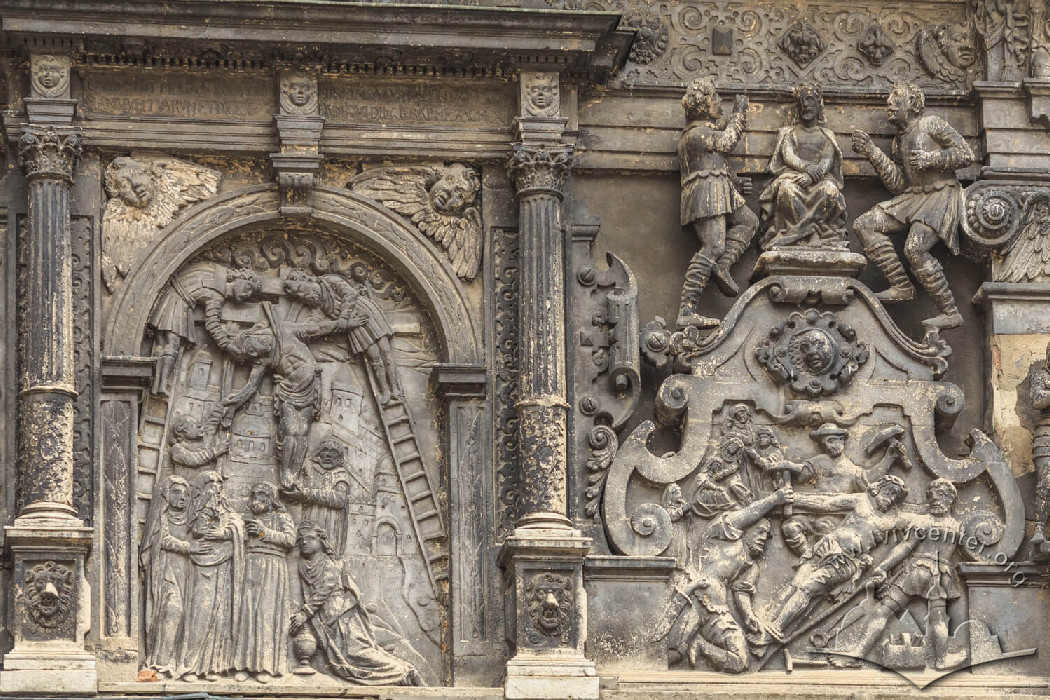
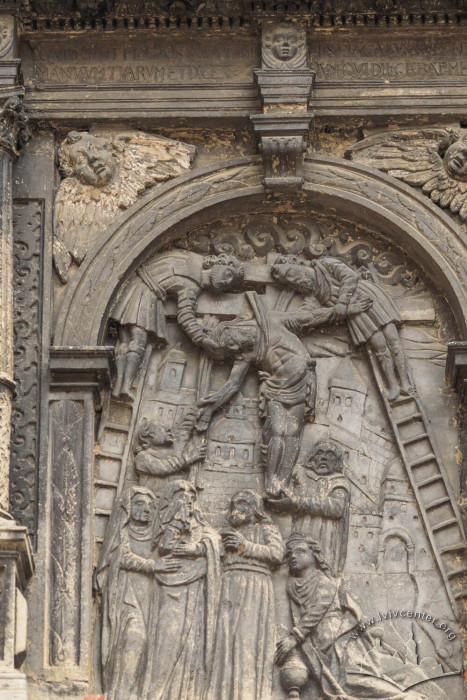
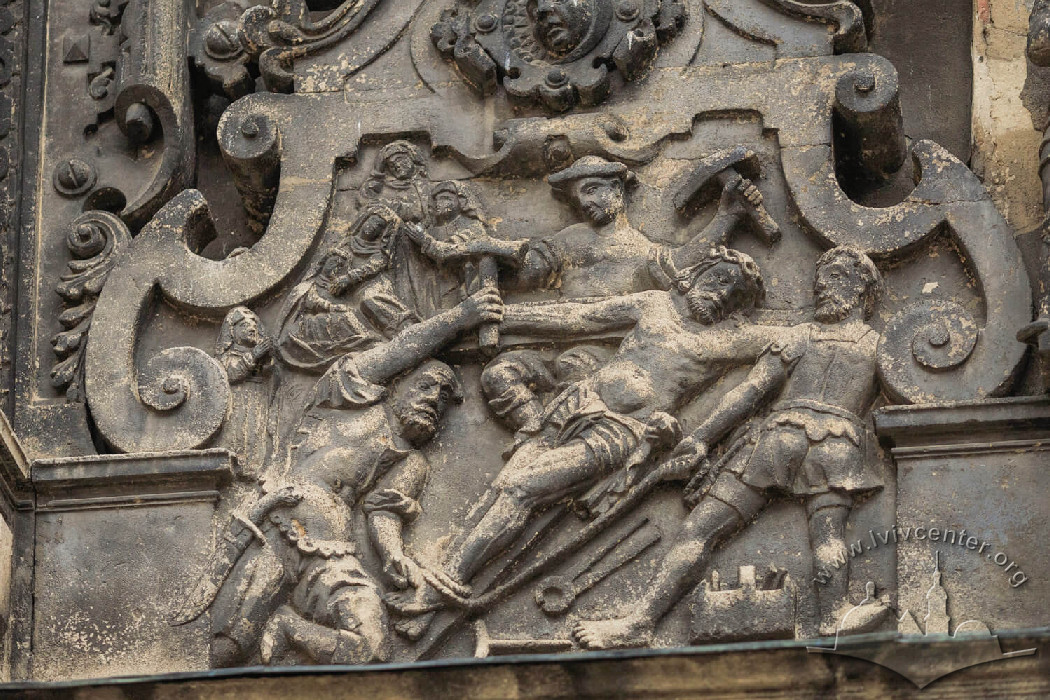
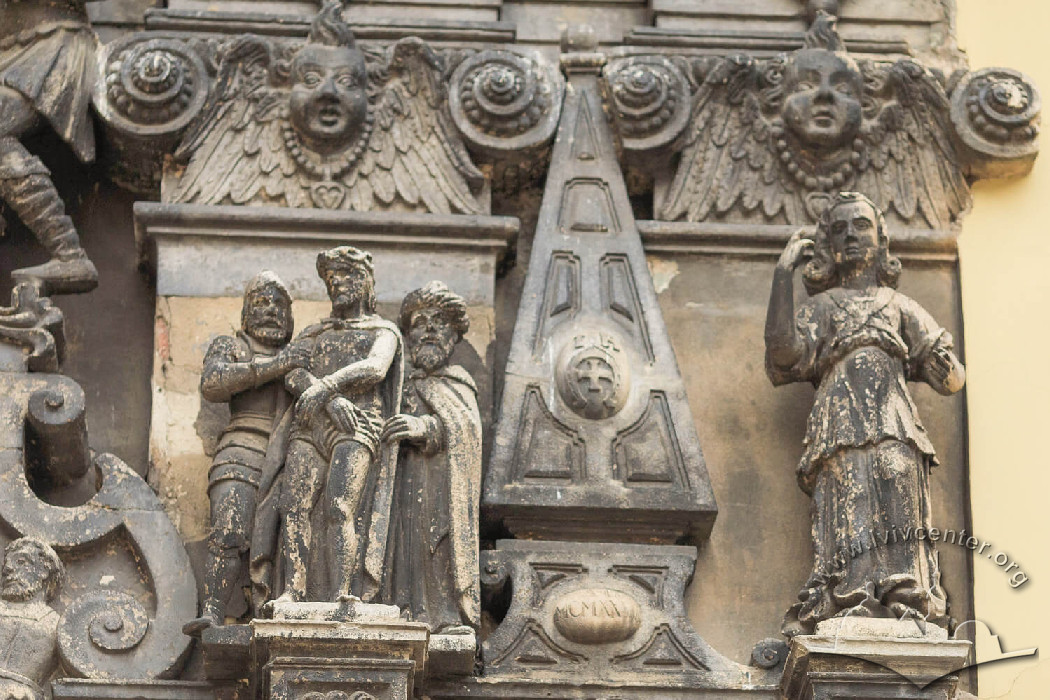
The façades are two-tiered and horizontally divided by a stone-carved cornice. The principal western elevation is completely covered in white-stone carvings consisting of ornamental and figurative reliefs (seventeenth century); in its style of execution, it resembles a three-dimensional iconostasis. The niches of the first tier contain the figures of the Apostles Peter and Paul, framed by columns covered in filigree carving. It is this sculptural decoration that positions the monument among the masterpieces of world art.
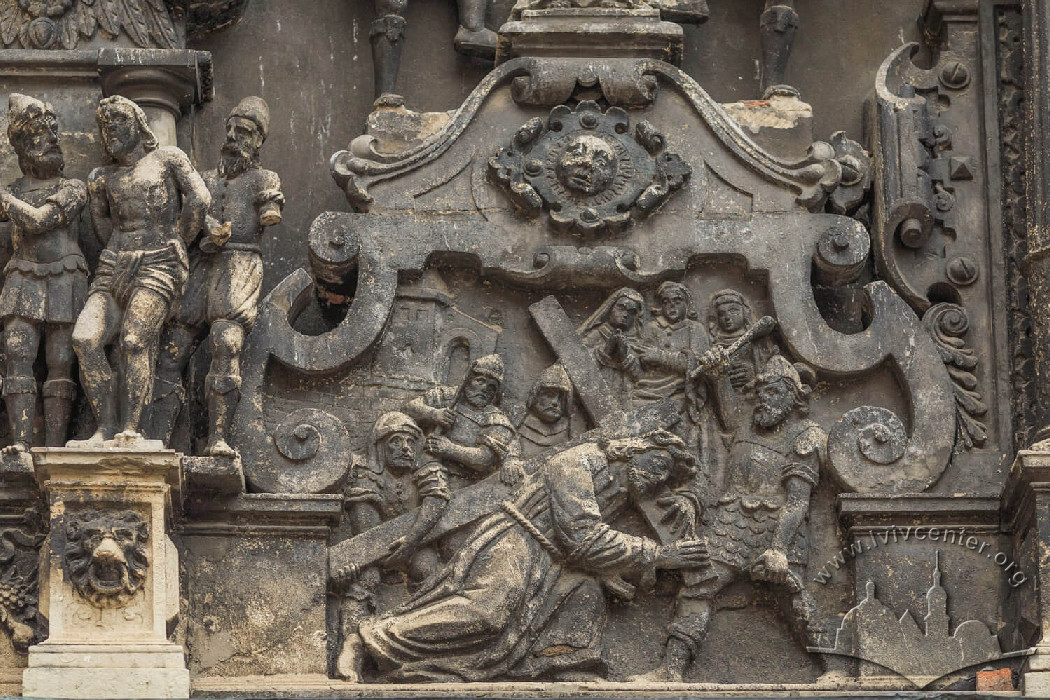
The theme of the Passion of Christ, depicted in the carvings of the second tier of the principal elevation, is consistently repeated within the chapel's interior. It reflects the eschatological essence of the monument's core concept as a family burial vault. When creating the multi-figure compositions, individuals from the seventeenth century served as models, making these depictions valuable not only artistically but also historically and ethnographically.
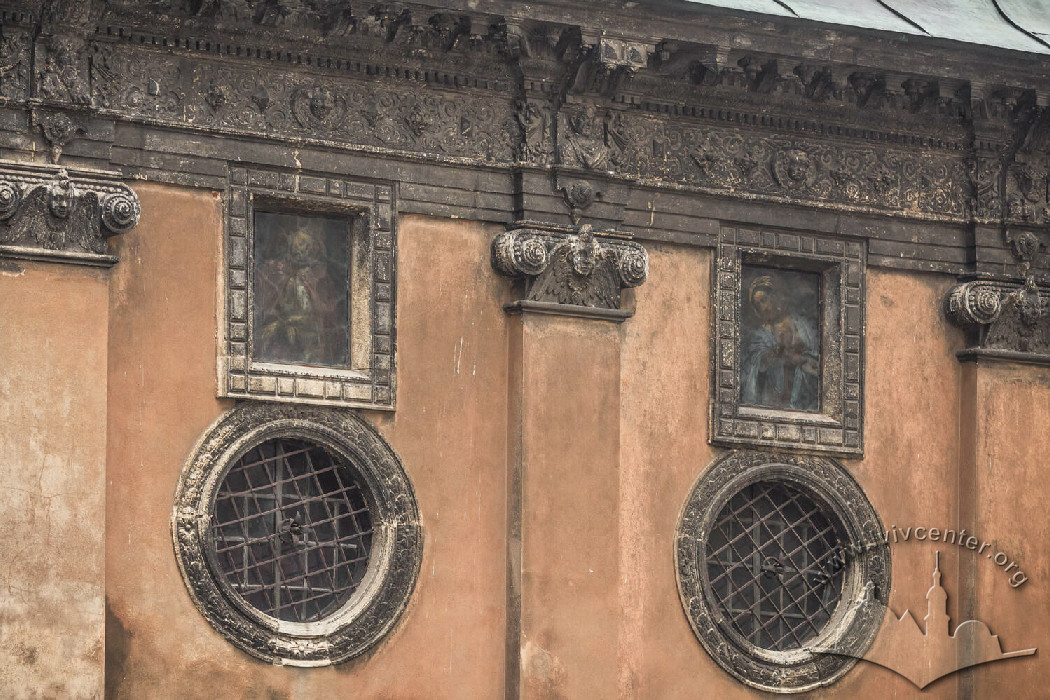
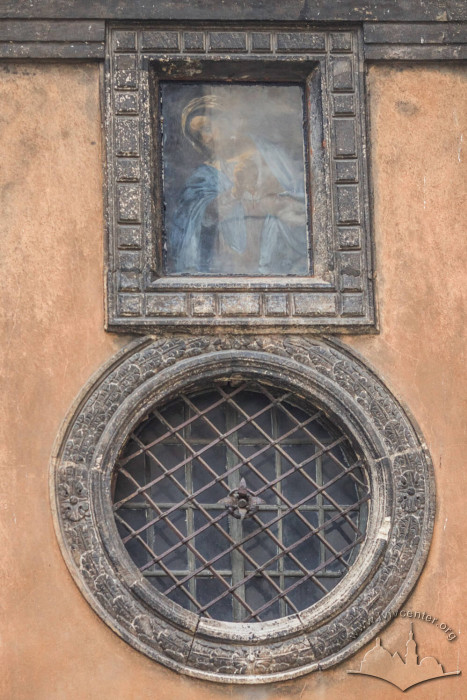
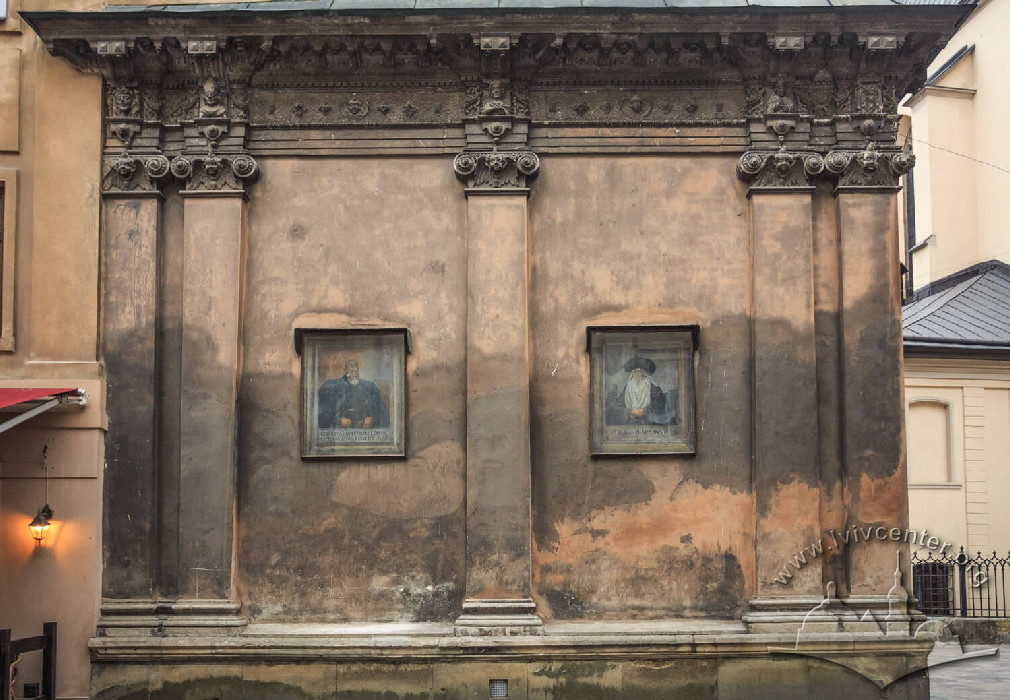
The side façades are decorated solely with pilasters and a lavishly stone-carved entablature of the cornice. On the rear eastern façade facing vul. Halytska, original fresco portraits of György Boim and his wife Jadwiga Boim are set into the wall plane.
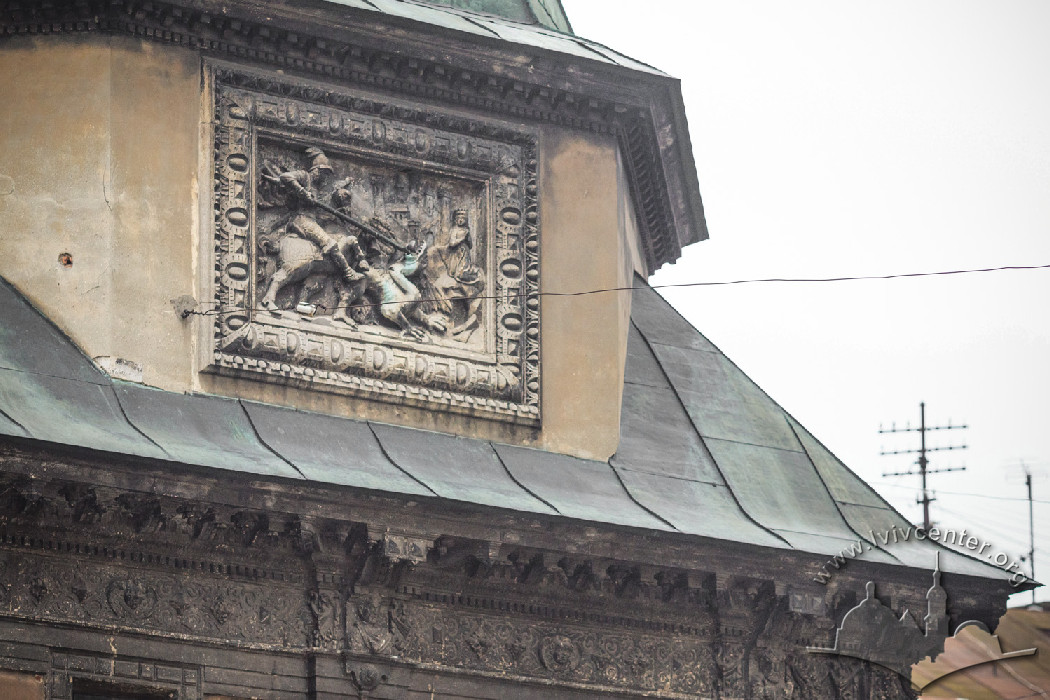
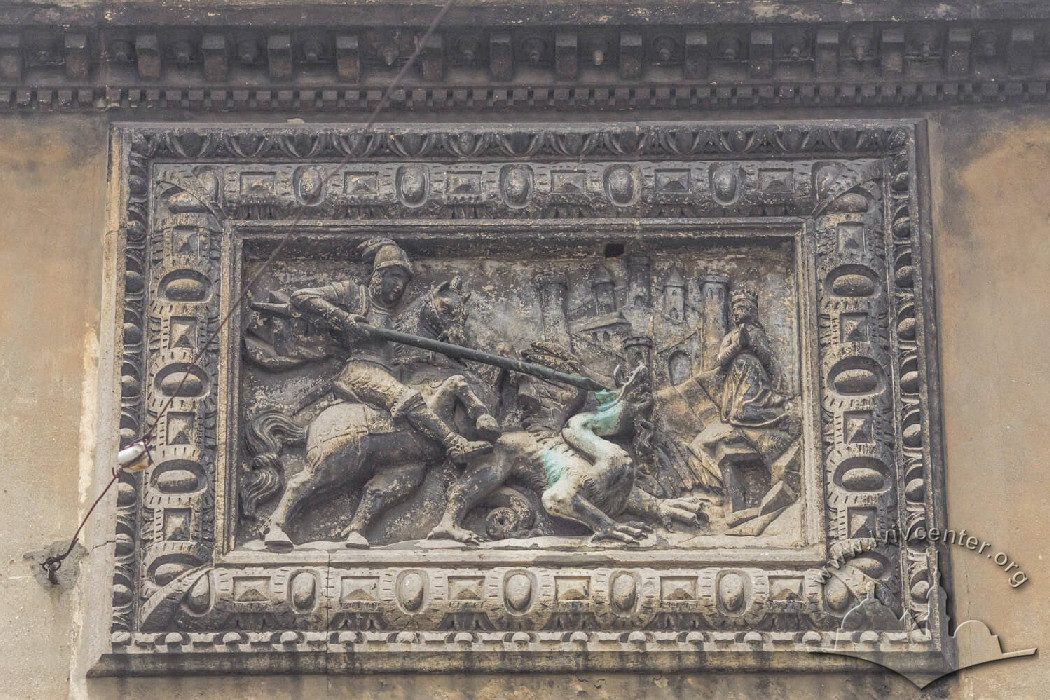
The side northern façade features a window and a relief depicting Saint George the Dragonslayer (seventeenth century), the patron saint of the founder.
The interior, which dates back to the first half of the seventeenth century, is striking for its abundance of reliefs and sculptural decor. The altar, featuring the central composition "The Agony in the Garden", is adorned with lavish carvings. The top of the altar merges into the chapel's dome, whose coffers contain depictions of prophets, cartouches, and symbolic-allegorical figures. The twelve coffers of the lower row feature sculptural busts of Old Testament figures crafted by Johann Pfister.
To the right of the altar, the wall displays an epitaph portrait of Boim's son-in-law, Zygmunt Brestler, along with a sculptural group titled "Pieta" from the workshop of sculptor Johann Pfister (c. 1617). At the center of the "Pieta" are alabaster figures of the Mother of God and Christ, surrounded by the kneeling figures of three generations of the Boim family.
Above the entrance portal are two portraits: the founder of the lineage, György Boim, and his grandson, the physician Paul. The inlaid entrance doors and the pews on both sides of the altar, executed around 1736 with rich painted ornamentation, also merit attention. Although the chapel as a whole is a monument of Renaissance architecture, features of Northern Mannerism are distinctly perceptible in its decoration.
Related buildings and spaces
-
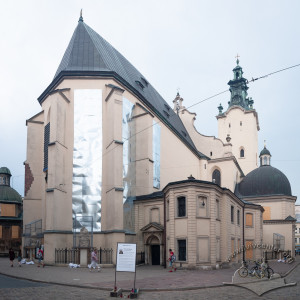
Pl. Katedralna, 1 – Cathedral of the Assumption of the Virgin Mary
People
Ludwik Tyrowicz –– sculptor, master of decorative carving, and architect of small forms. Tyrowicz's firm participated in the restoration of the marble and alabaster within the Boim Chapel.
Sources
- Проект "Галіціана" (І. Жук), 2001-2002.
- Володимир Вуйцик, Державний історико-архітектурний заповідник у Львові, (Львів, 1991).
- Володимир Вуйцик, Роман Липка, Зустріч зі Львовом, (Львів: Каменяр, 1987).
- Львів. Туристичний путівник, (Львів: Центр Європи, 1999).
- Борис Мельник, "Вулицями старовинного Львова", Серія "Історичні місця України", Вид. 3-тє зі змінами. (Львів: Світ, 2006).
- Пам'ятники градостроительства и архитектуры Украинской ССР, Т. 3, (Киев, 1985).
- Mieczysław Orłowicz, Przewodnik po Lwowie, (Lwów, 1925).