Pl. Dvirtseva, 1 – central railway station ID: 339
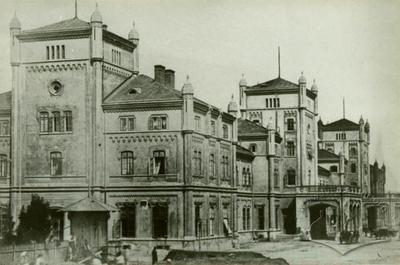
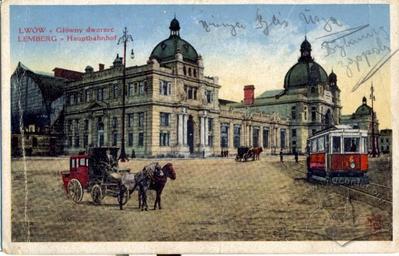
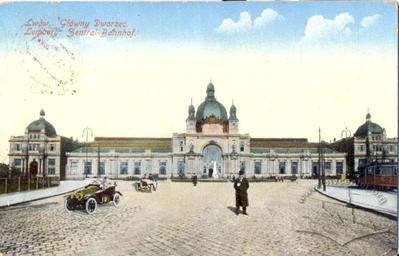
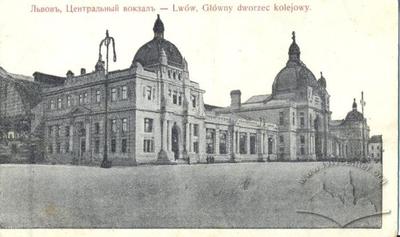
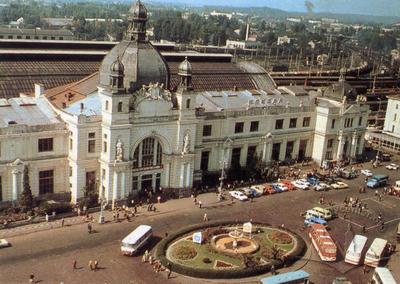
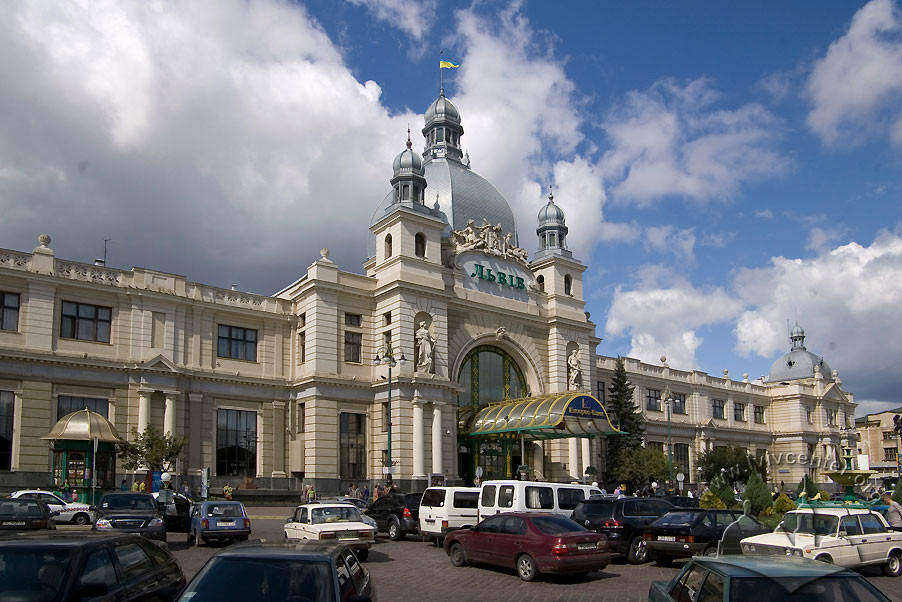
Lviv Central Railway Station building (1901–1904, architect Władysław Sadłowski — general design; Alfred Zachariewicz and Tadeusz Obmiński — interiors; engineering group led by Ludwik Wierzbicki — structural engineering; 1921–1922 — addition of the second floor; 1946–1951 — reconstruction with interior renovation). The architectural style is Secessionist with Neorenaissance elements. The train shed was designed by a group of railway engineers led by L. Wierzbicki; in 1946 — reconstructed; 2000–2001 — restored). The Lviv main station complex stands as a prime example of a monumental architectural structure designed at the turn of the twentieth century.
Story
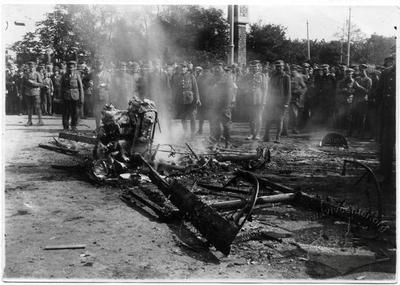
The station was constructed between 1900 and 1904 based on a design by architect Władysław Sadłowski and engineer Edmund Zieleniewski. The structural steel components of the frame were manufactured at the Vítkovice ironworks in Moravská Ostrava (now Czechia). The concept of constructing a train shed was proposed as early as 1895 by Julian Zachariewicz, who also designed its interior appearance. During the Polish-Ukrainian War of 1918–1919, the structure sustained significant damage. It was also severely damaged during the Second World War in 1939.
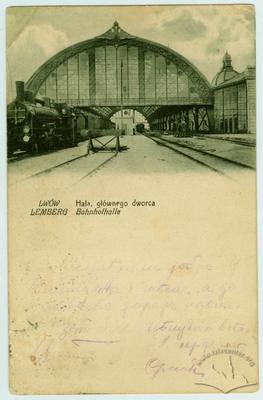
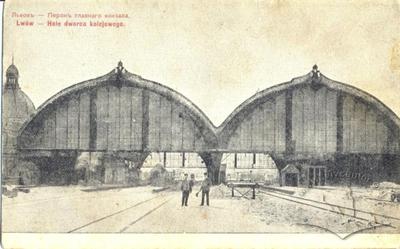
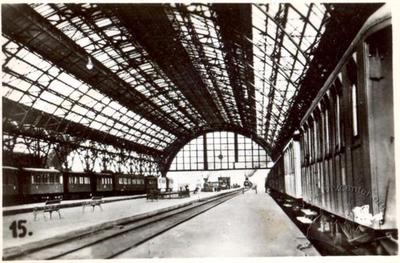
The train shed was heavily compromised during World War II. While it was repaired in the post-war period, most of the artistically decorated platform structures were lost. In the early twentyfirst century, the metal spans over the platforms were restored.
Architecture
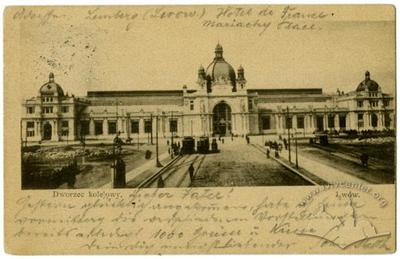
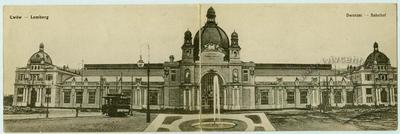
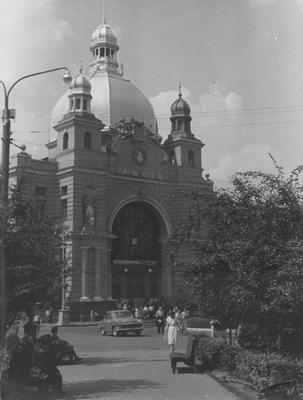
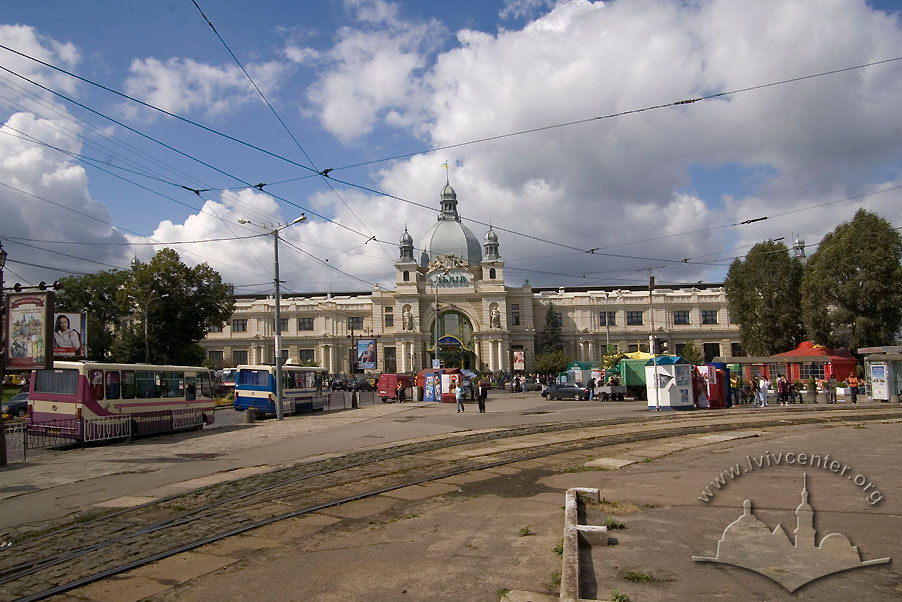
With its horizontal silhouette complemented by three high domed superstructures, the monumental station building stands out prominently in the perspective of vul. Chernivetska, which branches north from vul. Horodotska.
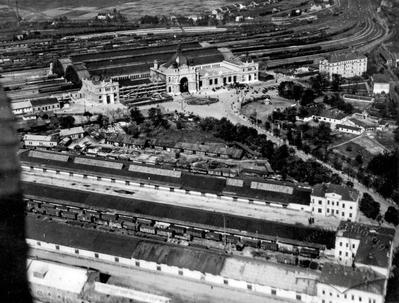
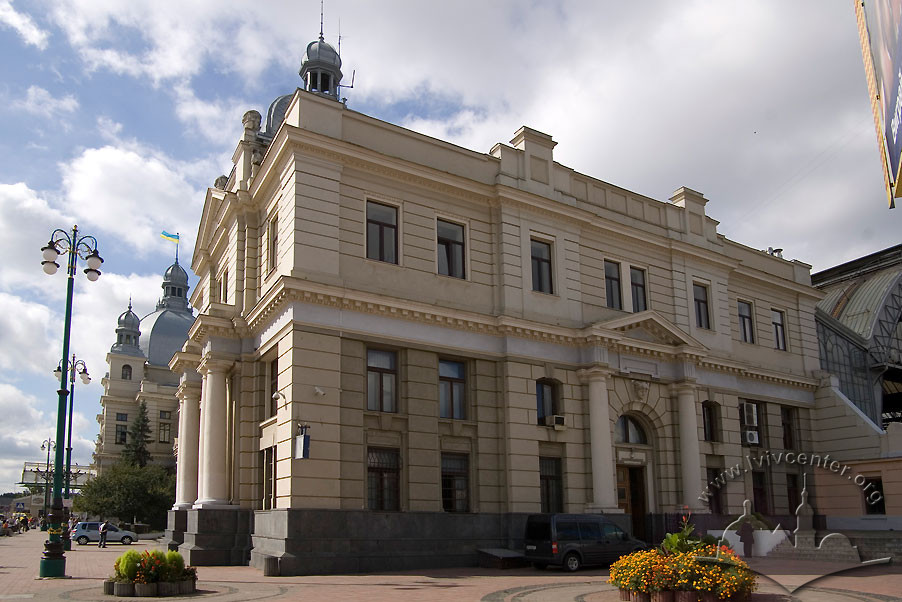
The building is a two-story brick structure with a plastered finish. Reinforced concrete was used for the foundations and floor slabs. The layout is based on an elongated rectangle, with its longer side adjacent to the platforms and railway tracks.
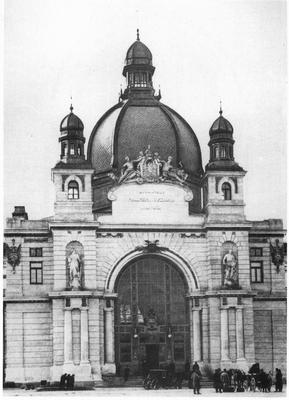
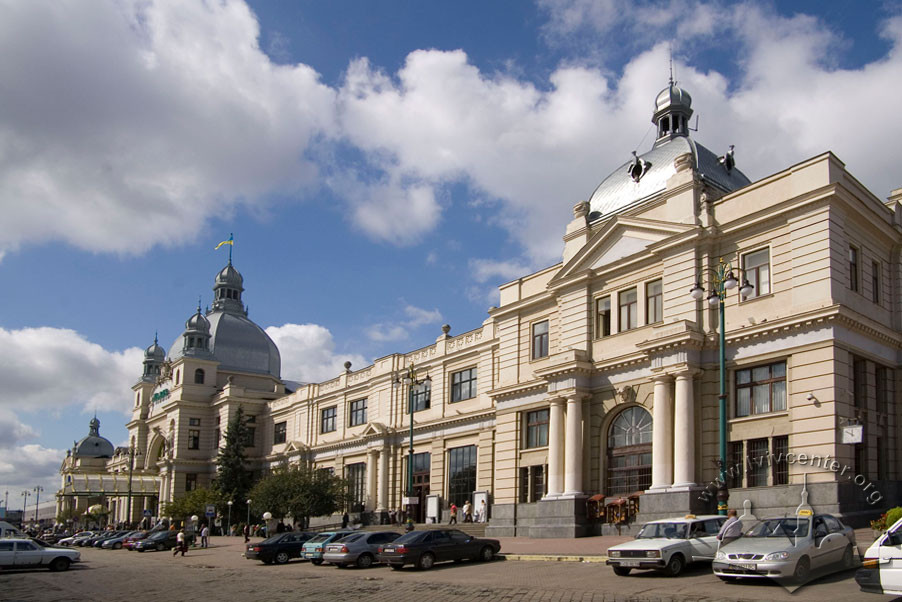
The central axis of the façade is anchored by a powerful avant-corps featuring a high rounded entrance arch, crowned by a massive central dome and flanked by smaller ones. The volumes of the side avant-corps, designed with columned porticos and also topped with domed structures, complete the building's composition.
The façades are rusticated, divided by floor levels with full entablatures, and topped by attics. The windows are rectangular. The main avant-corps is adorned with allegorical figures in niches flanking the portal (sculpted by Antoni Popiel) and a two-figure sculptural composition with a cartouche installed above the central entrance arch (sculpted by Piotr Wójtowycz).
The interior layout primarily consists of large halls connected by wide corridors. From these corridors, passengers access the platforms via underground tunnels.
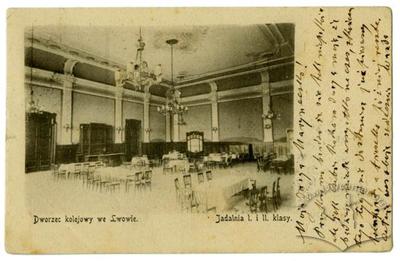
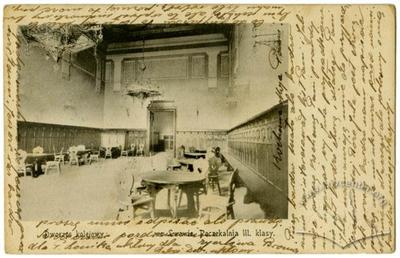
The original interior décor, which extensively featured Secessionist forms, has mostly been lost.
The Lviv Central Station building has become a cornerstone of the city's architectural fabric — the most important landmark in Lviv's northwestern sector.
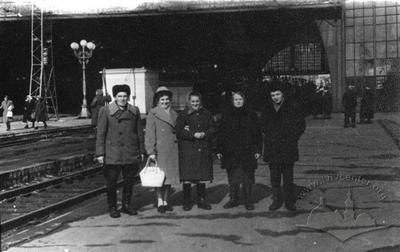
The Lviv station train shed structure is attached to the rear (northern) façade of the station building. The arched spans of the platform shed are formed by large-radius riveted steel trusses filled with reinforced glass. The total length of the structure is 159 meters, with a width of 69 meters. Under the roof are five platforms (ten tracks). The truss supports are styled to harmonize with other platform elements (metal fences, kiosks, clock stands, train schedules, etc.). Beneath the tracks, which are elevated to the level of the station's first floor, five transverse tunnels have been constructed for passenger access to the trains. For baggage transport, special electric lifts were installed on the platforms to lower items into the tunnels. Platform No. 5 was designated for commuter trains. The train shed is one of the most significant monuments of engineering architecture in Lviv and Western Ukraine from the early twentieth century.
Related buildings and spaces
-
Pl. Dvirtseva, 1 – cinema (no longer in operation)

People
Piotr Wójtowycz — sculptor and author of numerous monuments and façade sculptures throughout Lviv. He created the sculptural compositions for the central railway station.
Juliusz Wojciech Bełtowski — carver, sculptor, master of applied arts, painter, and educator. He was the author of unrealized projects for sculptural groups for the central railway station (1922).
Ludwik Tyrowicz — sculptor, master of decorative carving, and architect of small forms. Tyrowicz's firm participated in the decoration of the central railway station.
Antoni Popiel — sculptor and educator. One of the leading Lviv sculptors of the late 19th and early 20th centuries. He worked on the sculptural decoration of the Lviv railway station.
Georg Brandes — a Danish man of letters whose visit to Lviv took place in 1898.
Sources
- Oпис чacткoвo опрацьований в межах проекту "Галіціана", 2001-2002, автор І. Жук
- Бірюльов Ю. Мистецтво Львівської сецесії. – Видавництво „Центр Європи”: Львів, 2005. – С. 88.
- Котлобулатова І. Львівський вокзал. Споруда друга. // Галицька брама. №14. – Вид-во: Центр Європи, 1996. – С. 16-17.
- Львів. Туристичний путівник. Львів: вид-во „Центр Європи”, 1999. – С. 268-269.
- Львівська залізниця. Історія і сучасність. Львів: вид-во „Центр Європи”, 1996.
- Пурхля Я. Віденські впливи на архітектуру Львова 1772-1918. – Краків, 1991. – С. 37.
- Lwów. Ilustrowany przewodnik. – Lwów: Centrum Europy. – Wrocław: Via Nowa, 2001. – S. 154-155.
Citation
Khrystyna Kharchuk, Ihor Zhuk. "Pl. Dvirtseva, 1 – central railway station". Lviv Interactive (Center for Urban History). URL: https://lia.lvivcenter.org/en/objects/railway-station/Urban Media Archive Materials